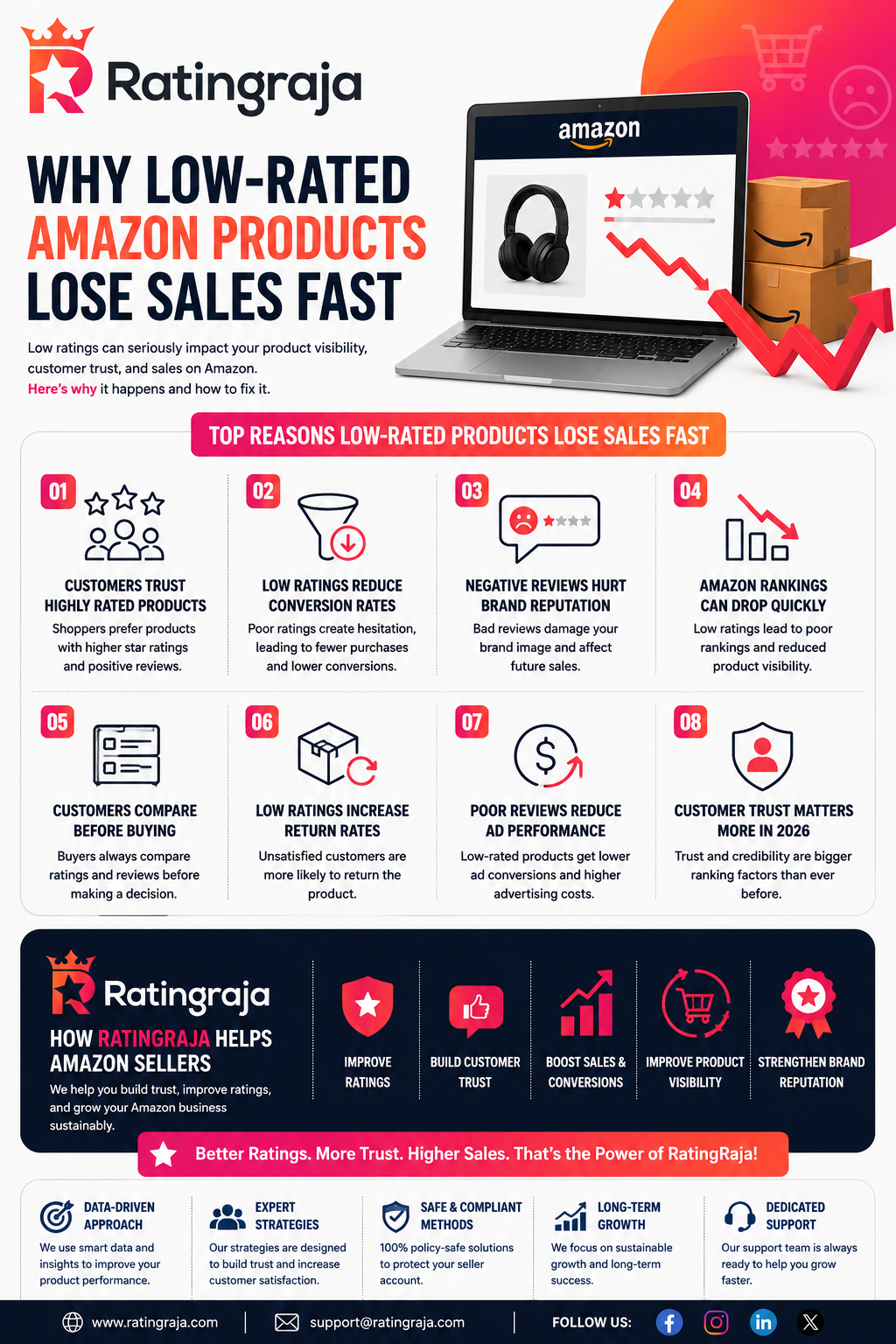
Amazon customers have more choices than ever in 2026. Before purchasing a product, buyers carefully compare ratings, reviews, pricing, and customer feedback.
Products with low ratings often struggle to compete because customers naturally prefer products that appear trustworthy and reliable.
Even a small drop in ratings can negatively impact:
- Product visibility
- Customer trust
- Conversion rates
- Organic rankings
- Long-term sales growth
In today’s competitive marketplace, strong customer reputation is essential for success.
In this blog, we will explain why low-rated Amazon products lose sales quickly and how sellers can improve their marketplace performance.
1. Customers Trust Highly Rated Products
Most Amazon shoppers check ratings before purchasing.
Products with:
- Higher star ratings
- Positive reviews
- Verified customer feedback
usually appear more trustworthy.
Low-rated products create doubt and reduce buyer confidence.
Customers often avoid products with poor ratings, even if the pricing is attractive.
2. Low Ratings Reduce Conversion Rates
Conversion rate is one of Amazon’s most important ranking signals.
When customers see low ratings:
- They hesitate to purchase
- Click-through rates decline
- Conversion rates drop
Amazon’s algorithm notices lower conversions and may reduce product visibility.
Lower ratings directly impact sales performance.
3. Negative Reviews Hurt Brand Reputation
Customer feedback shapes brand image.
Products with repeated negative reviews may develop a poor reputation for:
- Product quality
- Reliability
- Customer satisfaction
Bad reputation can affect future sales across multiple products under the same brand.
Strong reputation management is critical in 2026.
4. Amazon Rankings Can Drop Quickly
Amazon rewards products that customers trust and purchase frequently.
Products with poor ratings often experience:
- Reduced rankings
- Lower search visibility
- Declining organic traffic
As rankings drop, sales usually decrease even faster.
This creates a difficult cycle for sellers.
5. Customers Compare Products Before Buying
Amazon shoppers often compare several listings before making a purchase.
When competitors have:
- Better ratings
- Stronger reviews
- Higher customer satisfaction
buyers usually choose those products instead.
Even slight rating differences can influence purchasing decisions.
6. Low Ratings Increase Return Rates
Low-rated products often generate:
- More customer complaints
- Higher return rates
- Negative customer experiences
High return rates may negatively affect seller performance metrics and account health.
Customer satisfaction plays a major role in Amazon success.
7. Poor Reviews Reduce Advertising Performance
Amazon Ads work better for products with strong customer trust.
Low-rated products often experience:
- Lower ad conversions
- Higher advertising costs
- Reduced return on ad spend (ROAS)
Better reviews improve advertising efficiency and customer confidence.
8. Customer Trust Matters More in 2026
In 2026, Amazon customers rely heavily on social proof.
Buyers trust:
- Real reviews
- Verified ratings
- Positive customer experiences
Products with strong trust signals usually achieve better long-term growth.
Customer trust has become one of the biggest competitive advantages on Amazon.
How RatingRaja Helps Amazon Sellers Improve Ratings and Trust
RatingRaja helps Amazon sellers strengthen customer trust, improve product credibility, and support long-term marketplace growth through smart reputation-building strategies.
In competitive Amazon categories, products with stronger ratings and better customer confidence usually perform better in rankings and sales.
RatingRaja supports sellers by helping them:
- Improve customer trust
- Strengthen product credibility
- Support better conversion potential
- Increase visibility growth
- Improve reputation management
- Support long-term Amazon sales growth
- Build stronger customer engagement
Better trust and stronger ratings help products compete more effectively in crowded marketplaces.
Final Thoughts
Low-rated Amazon products lose sales quickly because customers prioritize trust, reviews, and positive experiences before purchasing.
Poor ratings can reduce conversions, lower rankings, hurt advertising performance, and damage long-term brand reputation.
Sellers who focus on customer satisfaction and reputation management are more likely to achieve sustainable Amazon growth in 2026.
Platforms like RatingRaja can help Amazon sellers improve ratings, strengthen trust, and support long-term marketplace success.