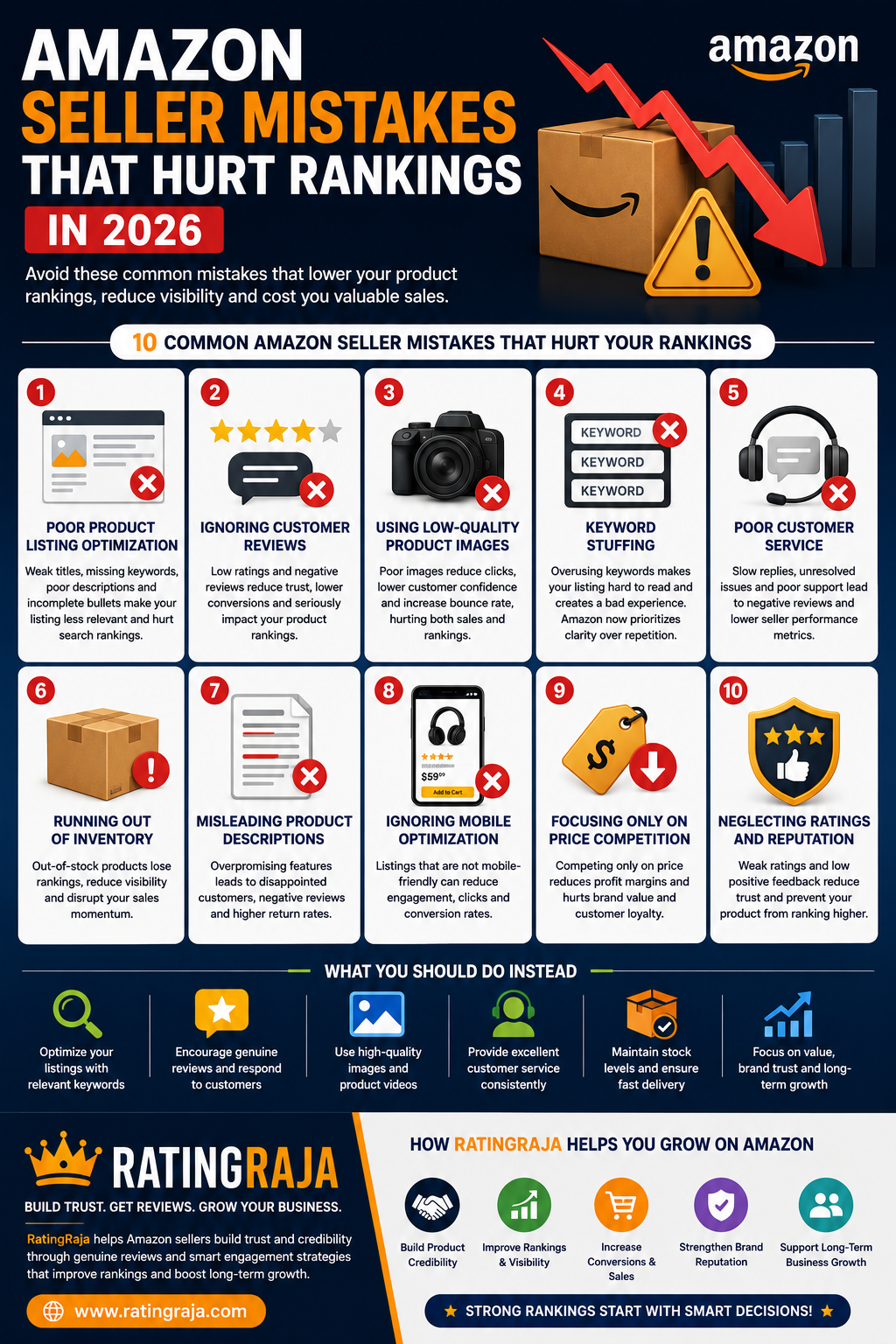
Amazon has become one of the most competitive online marketplaces in 2026. Sellers are constantly trying to improve rankings, increase visibility, and generate more sales.
However, many sellers unknowingly make mistakes that damage their product rankings and reduce overall marketplace performance.
Even small errors can negatively impact:
- Search visibility
- Customer trust
- Conversion rates
- Product sales
- Long-term growth
In this blog, we will discuss the most common Amazon seller mistakes that hurt rankings and how to avoid them.
1. Poor Product Listing Optimization
One of the biggest mistakes sellers make is creating incomplete or poorly optimized product listings.
Common issues include:
- Weak product titles
- Missing keywords
- Poor descriptions
- Low-quality images
- Incomplete bullet points
Amazon’s algorithm depends on listing relevance to rank products properly.
Well-optimized listings improve visibility and customer engagement.
2. Ignoring Customer Reviews
Customer feedback directly impacts rankings and conversions.
Products with:
- Low ratings
- Negative reviews
- Limited feedback
often struggle to rank competitively.
Ignoring customer concerns can damage trust and reduce sales performance over time.
3. Using Low-Quality Product Images
Images strongly influence customer clicks and buying decisions.
Poor visuals can:
- Reduce click-through rates
- Lower customer confidence
- Hurt conversions
- Increase return rates
Professional product photos and lifestyle images improve both visibility and trust.
4. Keyword Stuffing
Many sellers overload listings with excessive keywords hoping to improve rankings.
This often creates:
- Poor readability
- Confusing listings
- Bad customer experience
Amazon now prioritizes user experience more than keyword repetition.
Use keywords naturally and strategically.
5. Poor Customer Service
Customer experience plays a major role in Amazon performance.
Slow responses, unresolved complaints, and weak support can lead to:
- Negative reviews
- Higher return rates
- Poor seller metrics
- Reduced visibility
Strong customer support helps build long-term trust.
6. Running Out of Inventory
Out-of-stock products often lose rankings quickly.
Inventory issues can:
- Reduce sales velocity
- Lower search visibility
- Interrupt ranking momentum
Maintaining stable inventory is essential for consistent performance.
7. Misleading Product Descriptions
Overpromising product features may increase initial clicks, but it often leads to disappointed customers.
Misleading listings can cause:
- Negative reviews
- Higher returns
- Reduced trust
- Poor conversion rates
Honest product information improves customer satisfaction.
8. Ignoring Mobile Optimization
A large percentage of Amazon shoppers now browse on mobile devices.
Listings that are difficult to read on mobile may reduce:
- Customer engagement
- Click-through rates
- Conversion performance
Clear formatting and simple content improve the mobile shopping experience.
9. Focusing Only on Price Competition
Many sellers compete only on low pricing instead of building product value and brand trust.
This strategy often reduces:
- Profit margins
- Brand reputation
- Customer loyalty
Strong branding, customer experience, and trust are more sustainable growth strategies.
10. Neglecting Product Ratings and Reputation
Product reputation is one of the strongest ranking signals in 2026.
Products with:
- Strong ratings
- Genuine customer reviews
- Positive engagement
usually perform better in search rankings.
Maintaining customer satisfaction is essential for long-term success.
How RatingRaja Helps Amazon Sellers Improve Rankings
RatingRaja helps Amazon sellers strengthen product credibility and customer trust through effective reputation-building and engagement strategies.
In today’s competitive marketplace, products with stronger customer trust and better engagement often achieve higher visibility and stronger sales performance.
RatingRaja supports sellers by helping them:
- Improve customer confidence
- Build stronger product reputation
- Increase marketplace visibility
- Support higher conversion rates
- Grow long-term brand value
Final Thoughts
Many Amazon sellers lose rankings because of avoidable mistakes related to listings, customer experience, reviews, and branding.
In 2026, successful Amazon growth requires more than just listing products. Sellers must focus on customer trust, quality optimization, and long-term reputation management.
Platforms like RatingRaja can help sellers strengthen product credibility and support sustainable Amazon growth.