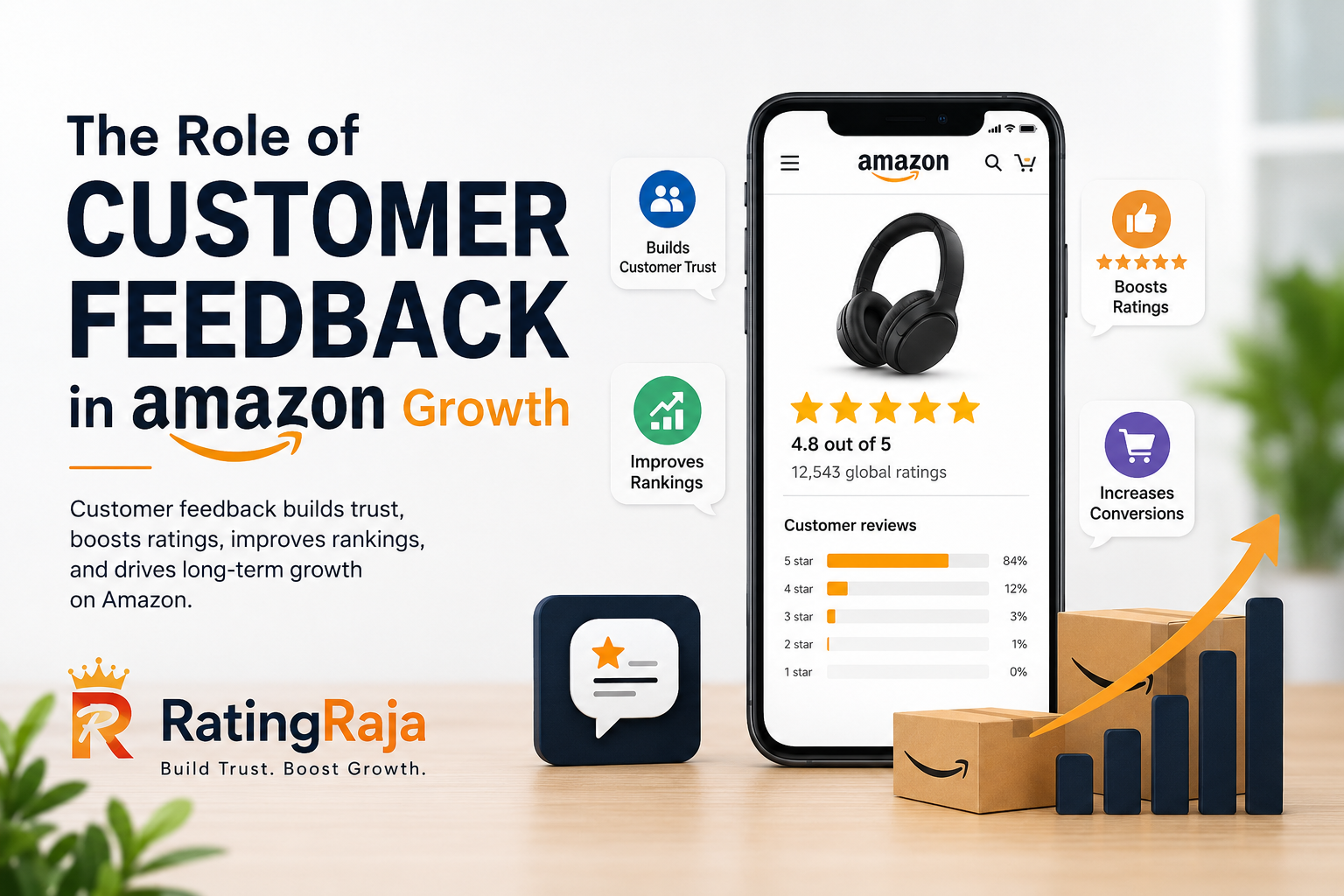
Customer feedback is one of the most powerful growth drivers in the Amazon ecosystem. In a marketplace where millions of products compete for attention, reviews, ratings, and buyer opinions often decide whether a product succeeds or disappears.
For sellers, understanding how customer feedback works is not optional—it is essential. From improving search ranking to increasing conversions, feedback directly shapes performance on Amazon.
In this blog, we’ll explore how customer feedback influences Amazon growth, why it matters so much, and how sellers can use it strategically to build long-term success.
What is Customer Feedback on Amazon?
Customer feedback on Amazon includes all forms of buyer responses after a purchase, such as:
- Product reviews (star ratings and written comments)
- Seller feedback (delivery experience, packaging, service)
- Questions & answers from buyers
- Return/refund reasons and product complaints
Together, these signals help Amazon evaluate both product quality and seller reliability.
Unlike traditional retail, Amazon operates on a trust-based algorithm. Every review contributes to visibility, credibility, and sales potential.
Why Customer Feedback Matters for Amazon Growth
Customer feedback is not just social proof—it is a ranking factor and conversion tool. Here’s why it plays such a critical role:
1. Improves Product Ranking
Amazon’s algorithm prioritizes products with:
- Higher ratings
- More positive reviews
- Consistent customer satisfaction
Products with strong feedback are more likely to appear on the first page of search results. This directly increases visibility and organic traffic.
2. Builds Buyer Trust
Most customers don’t trust products without reviews. In fact, shoppers often read reviews before even checking product descriptions.
Positive feedback:
- Reduces purchase hesitation
- Increases perceived product quality
- Builds confidence in new buyers
Without strong reviews, even great products struggle to convert.
3. Increases Conversion Rate
Good reviews act as “silent salespeople.” When customers see real experiences from other buyers, they are more likely to complete the purchase.
A product with:
- 4.5+ star rating
- 50+ reviews
typically converts significantly better than a similar product with little or no feedback.
4. Helps Improve Product Quality
Customer feedback is a direct source of product improvement. Sellers can identify:
- Defects or quality issues
- Packaging problems
- Missing features
- Customer expectations
By acting on feedback, sellers can refine their products and reduce negative reviews over time.
5. Impacts Buy Box Eligibility
The Buy Box is the “Add to Cart” section that drives most Amazon sales.
While pricing and delivery matter, customer satisfaction and seller feedback also influence eligibility. Poor ratings can reduce your chances of winning the Buy Box, even if your price is competitive.
Types of Customer Feedback That Influence Growth
Not all feedback is the same. On Amazon, different types of feedback serve different purposes:
⭐ Product Reviews
These are the most influential. They affect:
- Product ranking
- Buyer trust
- Conversion rates
🧾 Seller Feedback
This focuses on:
- Shipping speed
- Packaging quality
- Customer service
❓ Buyer Questions
These help clarify doubts and reduce returns. Quick, helpful answers improve conversion.
🔁 Return Feedback
Returns reveal product mismatches and help sellers fix listing accuracy issues.
How Negative Feedback Affects Amazon Growth
Negative feedback is not just a rating issue—it directly impacts sales performance.
Common effects of poor feedback:
- Drop in search ranking
- Lower conversion rate
- Reduced Buy Box share
- Higher return rate
- Loss of customer trust
Even a few negative reviews can significantly reduce sales if not managed properly.
However, negative feedback is not always bad—it provides valuable insights for improvement.
How Sellers Can Use Customer Feedback for Growth
Successful Amazon sellers don’t just collect feedback—they use it strategically.
1. Optimize Product Listings
If customers are confused about product features, improve:
- Product descriptions
- Bullet points
- Images
- FAQs
Clear listings reduce misunderstandings and negative reviews.
2. Improve Product Quality
Recurring complaints should be treated as signals for improvement.
For example:
- If buyers complain about durability → upgrade materials
- If size issues occur → update sizing chart
This reduces future negative feedback.
3. Enhance Packaging and Delivery
Many reviews are based on delivery experience, not just product quality.
Improve:
- Packaging protection
- Labeling clarity
- Delivery speed (via better logistics partners)
4. Respond to Customer Feedback
Engaging with customers builds trust. Responding to reviews shows that the seller cares.
Even simple responses like:
“Thank you for your feedback. We will improve this in future batches.”
can improve brand perception.
5. Encourage Positive Reviews (Ethically)
Sellers can politely encourage satisfied customers to leave reviews by:
- Following up after delivery
- Providing good customer support
- Ensuring product satisfaction
Avoid fake or paid reviews, as Amazon strictly penalizes such activity.
The Connection Between Feedback and Amazon SEO
Amazon SEO (Search Engine Optimization) is heavily influenced by customer feedback signals.
Key SEO benefits of strong feedback:
- Higher click-through rate (CTR)
- Better keyword ranking
- Increased dwell time on product pages
- Lower bounce rate
In simple terms, better reviews = better visibility.
How Rating Platforms Like RatingRaja Help Sellers
Platforms like ratingraja.com play an important role in helping sellers understand and manage customer feedback effectively.
They help by:
- Tracking review performance trends
- Analyzing customer sentiment
- Identifying improvement areas
- Helping sellers build stronger reputation systems
This kind of insight helps sellers make data-driven decisions instead of guessing what customers want.
Future of Customer Feedback in Amazon Growth
Customer feedback will continue to grow in importance as Amazon becomes more competitive. In the future, we can expect:
- AI-based review analysis
- More emphasis on verified purchases
- Stronger fraud detection systems
- Deeper integration of customer experience signals in ranking
Sellers who adapt early will have a major advantage.
Final Thoughts
Verified reviews are one of the most important trust signals for Amazon sellers in 2026. They influence customer confidence, buying decisions, rankings, and long-term business growth.
Brands that focus on customer satisfaction and authentic feedback will continue to perform better on Amazon.
Platforms like RatingRaja can help sellers strengthen their reputation and support long-term marketplace success.